Tutorial: How to Make a Simple Indian Style Kurti/Tunic

FloralKurtiCloseup

When you cannot visit India that often, you have to come up with creative solution to make Indian attire for your casual ethnic parties. That’s when I started looking for ready made sewing pattern available in fabric store in US. Guess what I found? Butterick Pattern 5812.

http://butterick.mccall.com/b5812-products-27960.php?page_id=155

You can get it either online or from fabric store. I bought mine for $1 sale from Hancock Fabrics 🙂

It is a very simple and easy pattern to sew. Let’s get started.

What You Need

KurtiMaterials

  • Floral Printed Fabric – 1 yard. (Mine is polyester, but cotton/cotton blend is perfect too)
  • Double Folded Bias Tape
  • Trim 3.5 yards
  • Fabric Glue
  • Scissors
  • Matching thread
  • Butterick pattern 5812

Let’s Get Started

Step 1: Do some measurement and figure out your size from the top back of the envelope. It is a loose fitting top so no accurate measurement is needed. Open up the envelope and cut out pattern piece 9, 10 and 11. Yes that’s it, only 3 pieces if you attach sleeves or use piece 9, 10 if you want sleeveless.

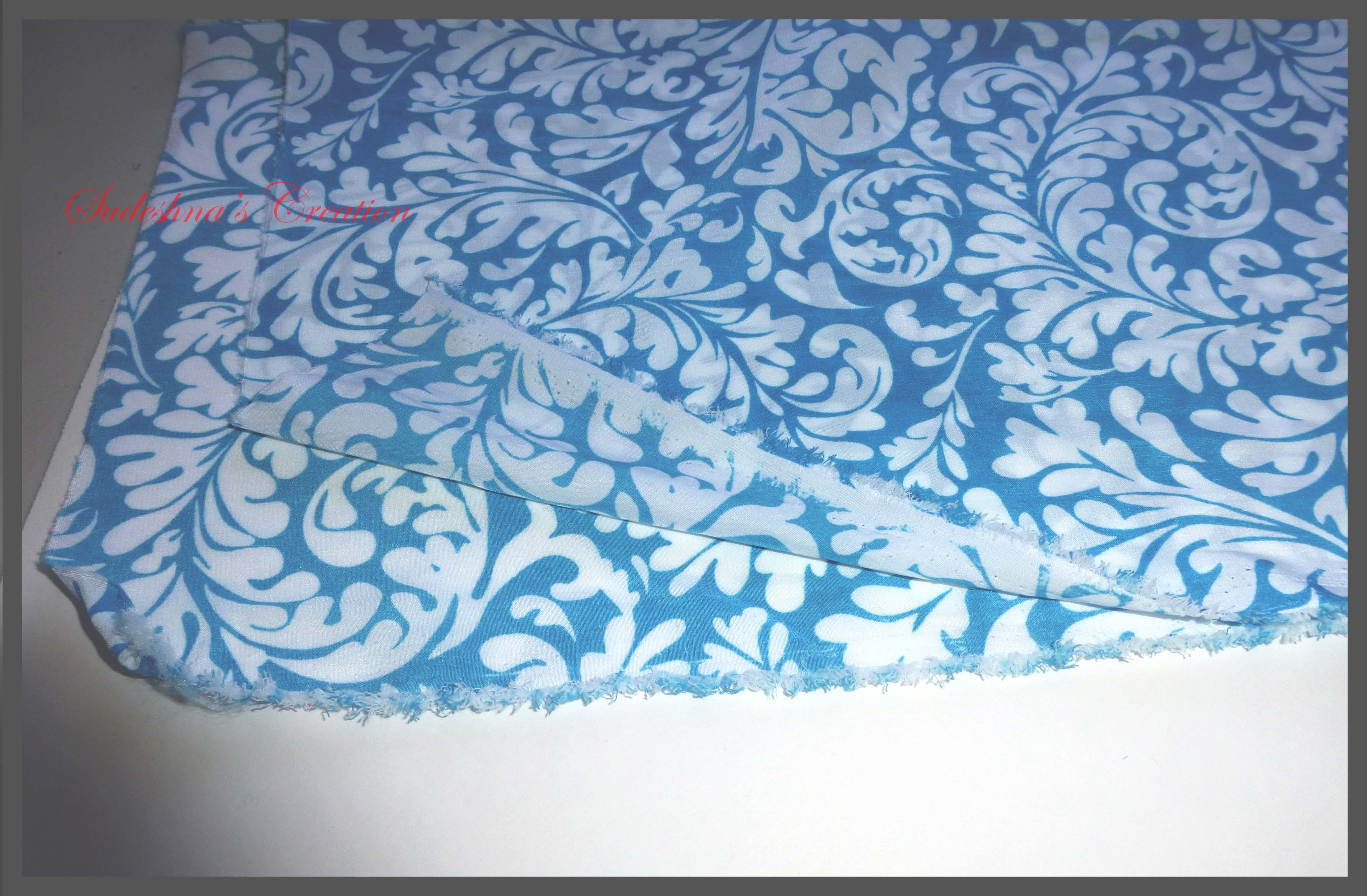
Step 2: Fold the fabric in half as shown in the picture below( unfinished edges together). Unfinished edge is called selvage. Place pattern piece 10 ( along  the fabric fold line) and piece 9 and 11 on the fabric. Use a pair of sharp scissor to cut the fabric.

P1010278P1010271

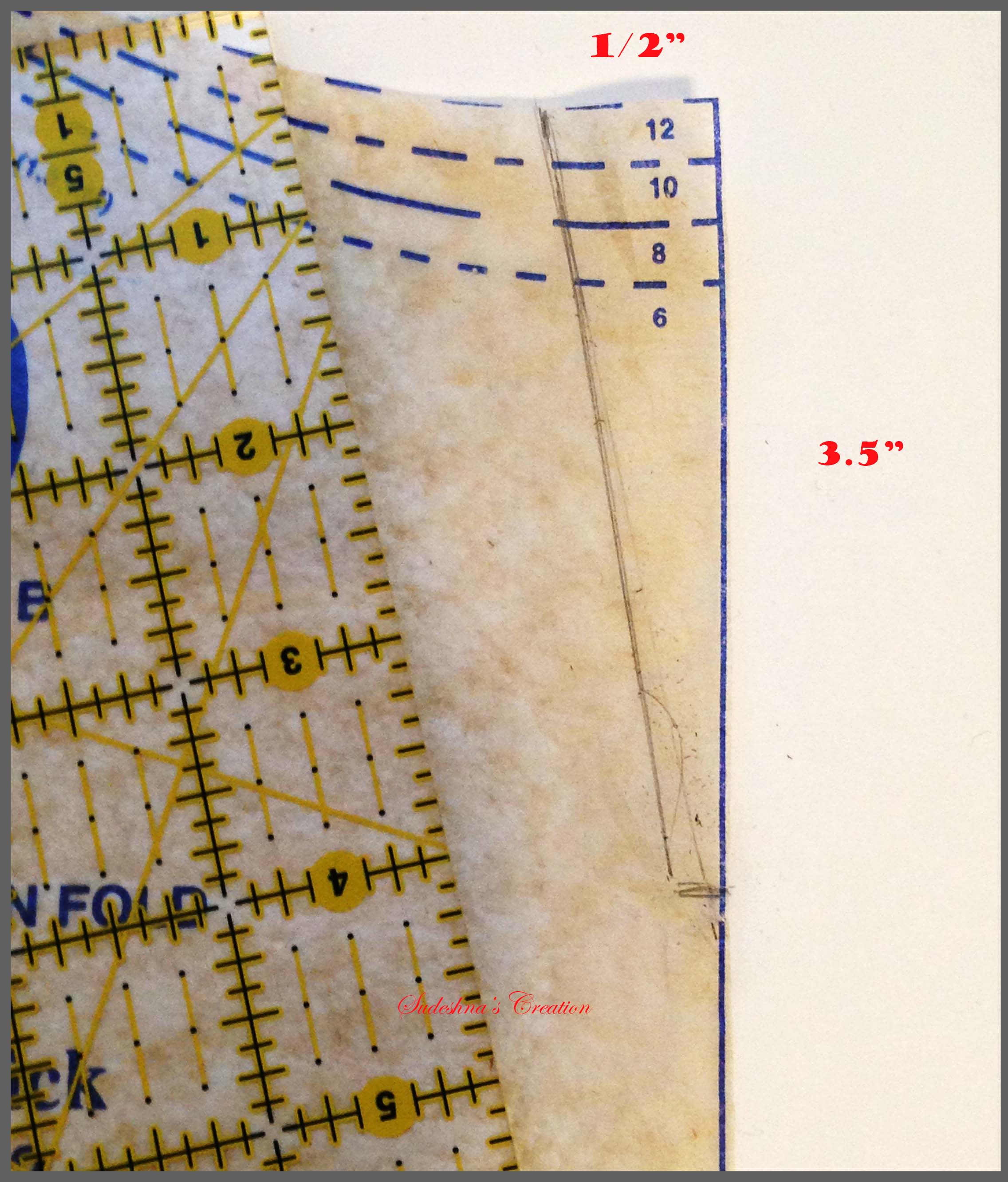
Step3: Change the neck line like shown in the picture if you would like to alter the neckline. You can keep the exact rounded neckline for simplicity. That will work fine too.

Neckline

Use this new pattern to cut the piece 10 (front of the tunic).

Step 4: Sew style B using the pattern instruction and finish the neckline using double folded bias tape. Now use a fabric glue to attach the trim along the neckline. I used a sequin trim so I cannot use machine to sew. But if you use a embroidered trim or fabric based trim you can use machine to sew it on.

Note: I  altered the pattern at the back side. You can sew the whole backside up. The neck is wide enough that the top should slid right into your body without any back opening. Try it first. It makes the back sewing a breeze. No need to worry about finishing with button or zipper, as instructed in the pattern.

biastapefinishingneckline

Step 5:  Attach the sleeve according to the instruction and after hemming glue/sew the trim.

Step 6: Finish hemline and glue/sew the trim.

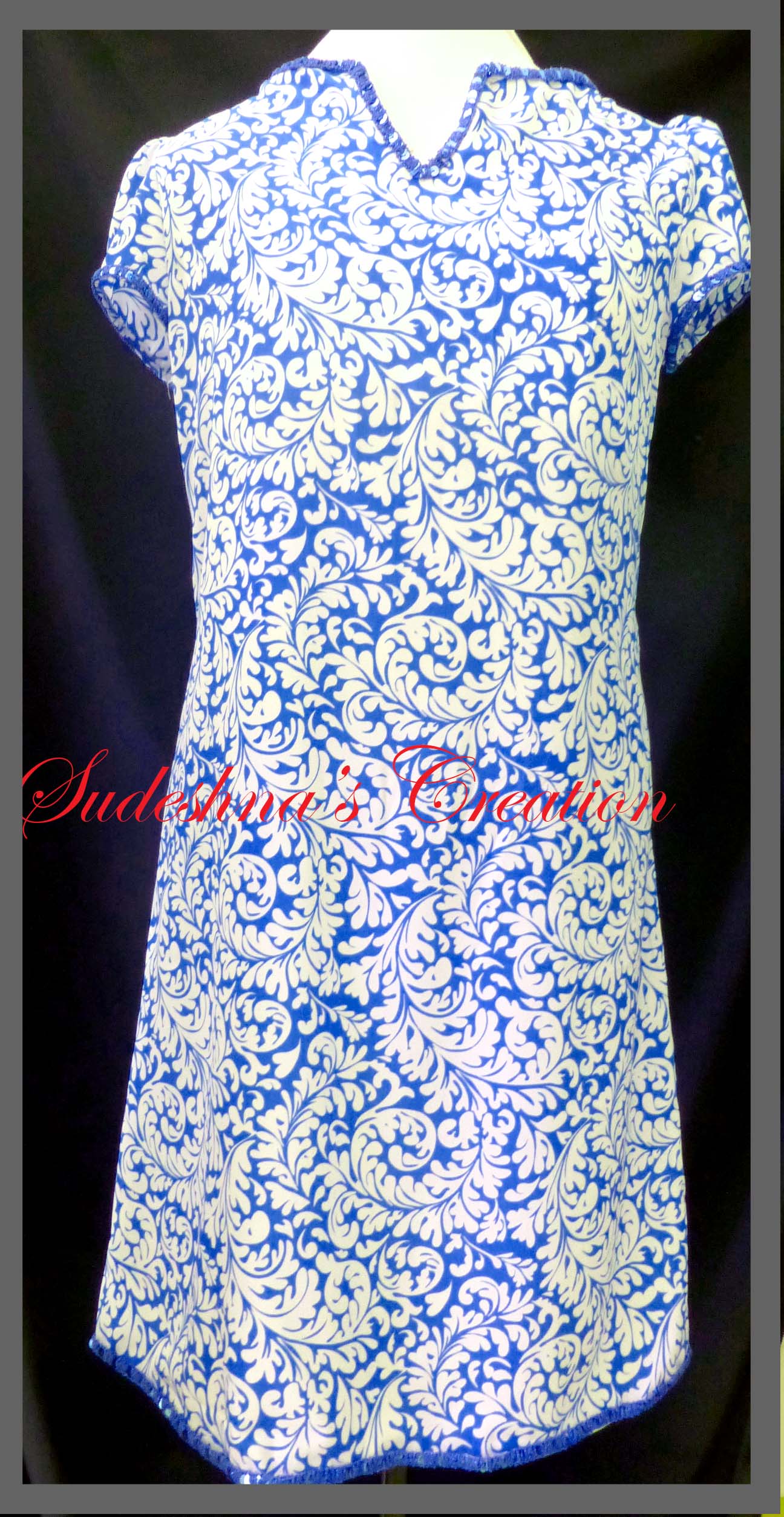
End product:

IndianStyleKurti


Tutorial : Quilted Pencil Pouch

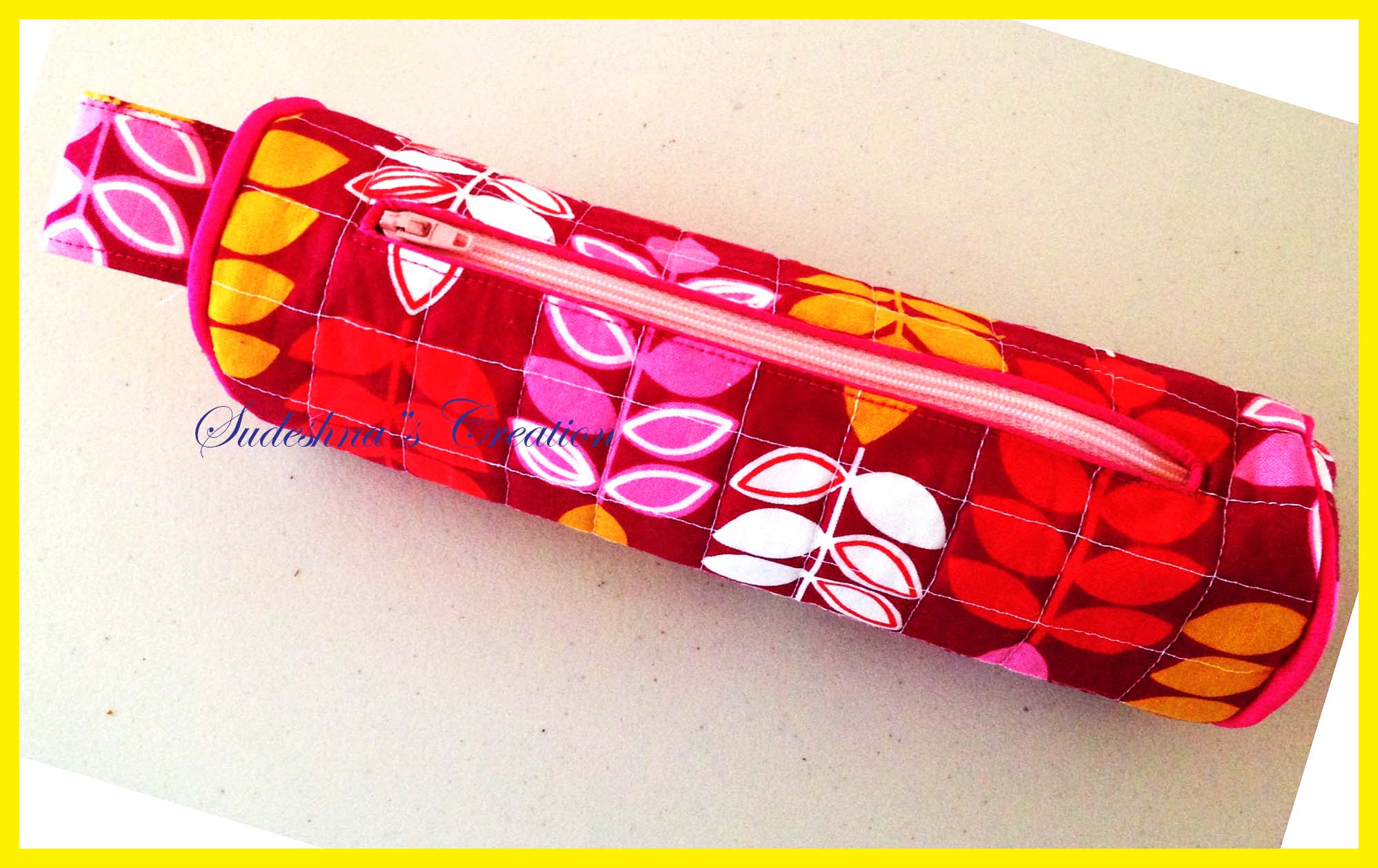
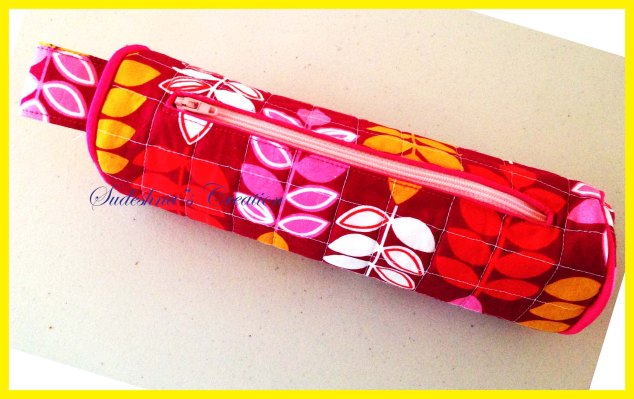
photo(29)

I started this project to learn the special zipper insertion technique. But the product turned out to be too cute to  miss. Thought this could be a great little tutorial for lot of different techniques to learn and try on. But believe me it is quick to finish and at the end you will realize how many new things you learn. Okay let me start.

Materials List:

  • 1/3 Yard of Outer fabric (Can be cotton or any other scrap fabric you have),
  • Cotton batting/Fleece for lining
  • 1/3 yard interfacing
  • 7″ zipper
  • piping cord
  • matching bias tape
  • Thread to match
  • Sewing machine, Scissors

Step 1: Cutting Fabric

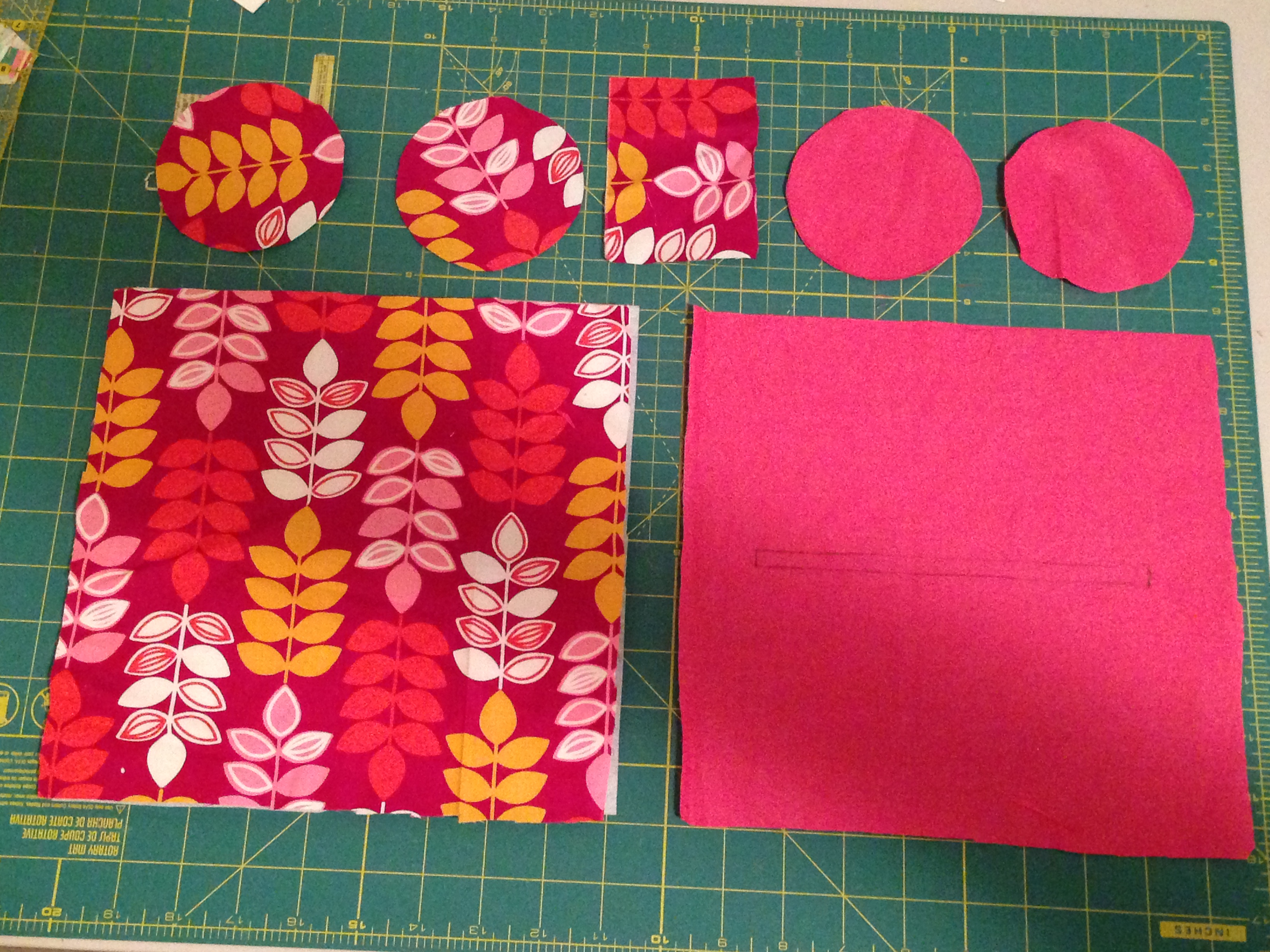
Cut out the following from outer fabric, lining fabric and interfacing:

photo(3)

  •  9.5″ x 9.5″  square from Outer fabric + Lining fabric + interfacing + batting/ fleece ;
  • 3.5″ diameter circle from Outer fabric + Lining fabric + interfacing + batting/ fleece
  • 2.5″x4″ rectangle from Outer fabric + Interfacing for pull tab

Step 2: Making Pull Tab

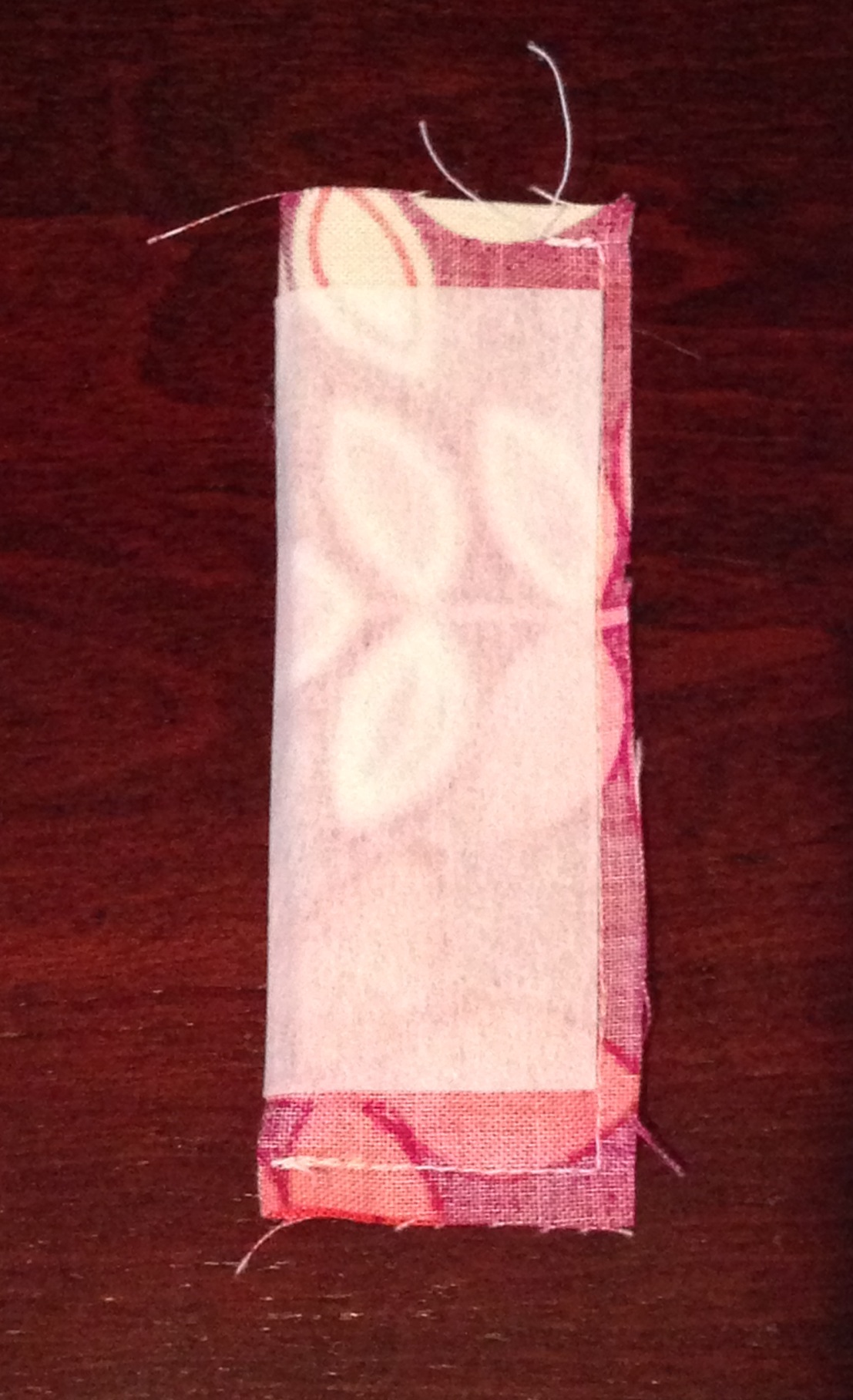
Take the 2.5″x4″ outer fabric and interfacing and place fusible part of interfacing on the wrong side of the fabric and iron it to fuse it. Then fold the fabric lengthwise right side of fabric facing together. Stitch 1/8″ seam as shown to close the 3 sides , but a little opening at the end to turn the fabric inside out.

pull tab

Use a pencil or knitting needle to push the closed end to help turn it around to right side out. Press and fold the fabric.

Step 3: Marking  for the Zipper Insertion

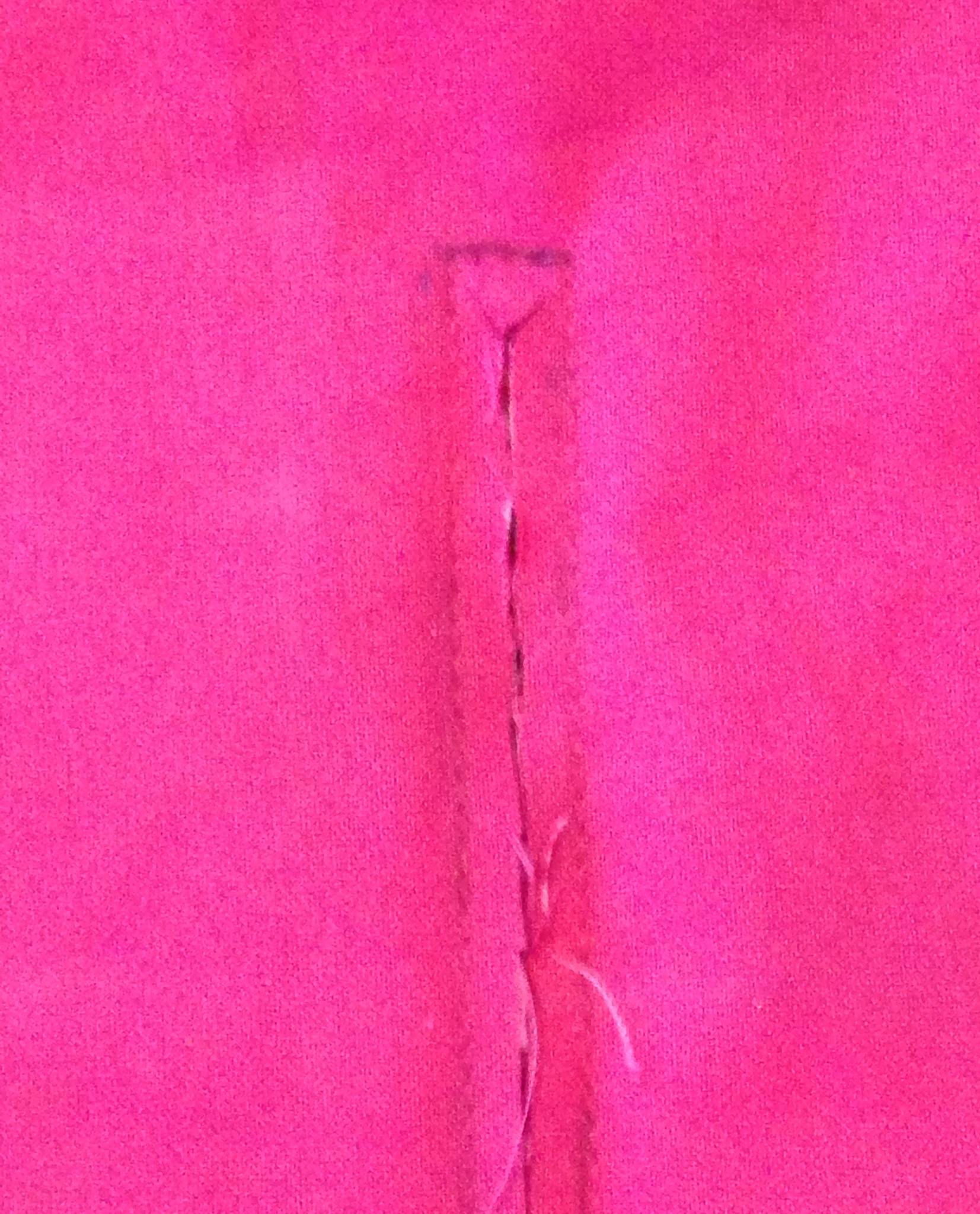
Fold the outer fabric and lining in half to make a crease to mark the center and draw a rectangle as shown 3/4″x7″ in the middle.

photo(1)

Step4: Quilting

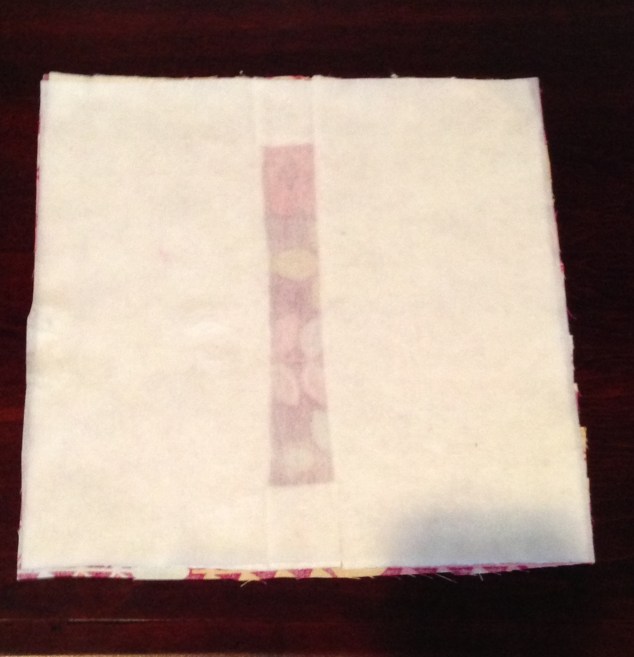
Place batting on the wrong side of the fabric and then fusible interfacing (fusible part facing the batting), making a sandwich of fabric and interfacing with batting as a filling.See pic: I have intentionally cut a hole in batting in the middle where I drew the rectangle ( previous pic) to reduce the bulk. But that is optional. Iron the interfacing to fuse it to the batting.
photo(2)

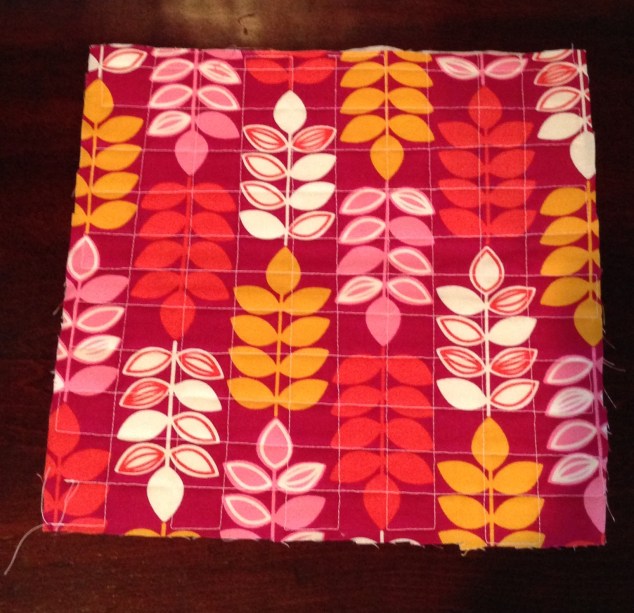
Now take the quilt sandwich to sewing machine and sew straight stitches. I used a quilting walking foot but normal walking foot will be just fine. See how I straight stitched to make a grid. This is the simplest form of quilting and looks quite effective in handbag or garments.
photo(5)

Use the same technique to make the quilted side circles. At the end you will have:

photo(6)

Step 5 : Adding Piping(Optional)

This is an optional step. But piping adds an extra dimension to any bag.

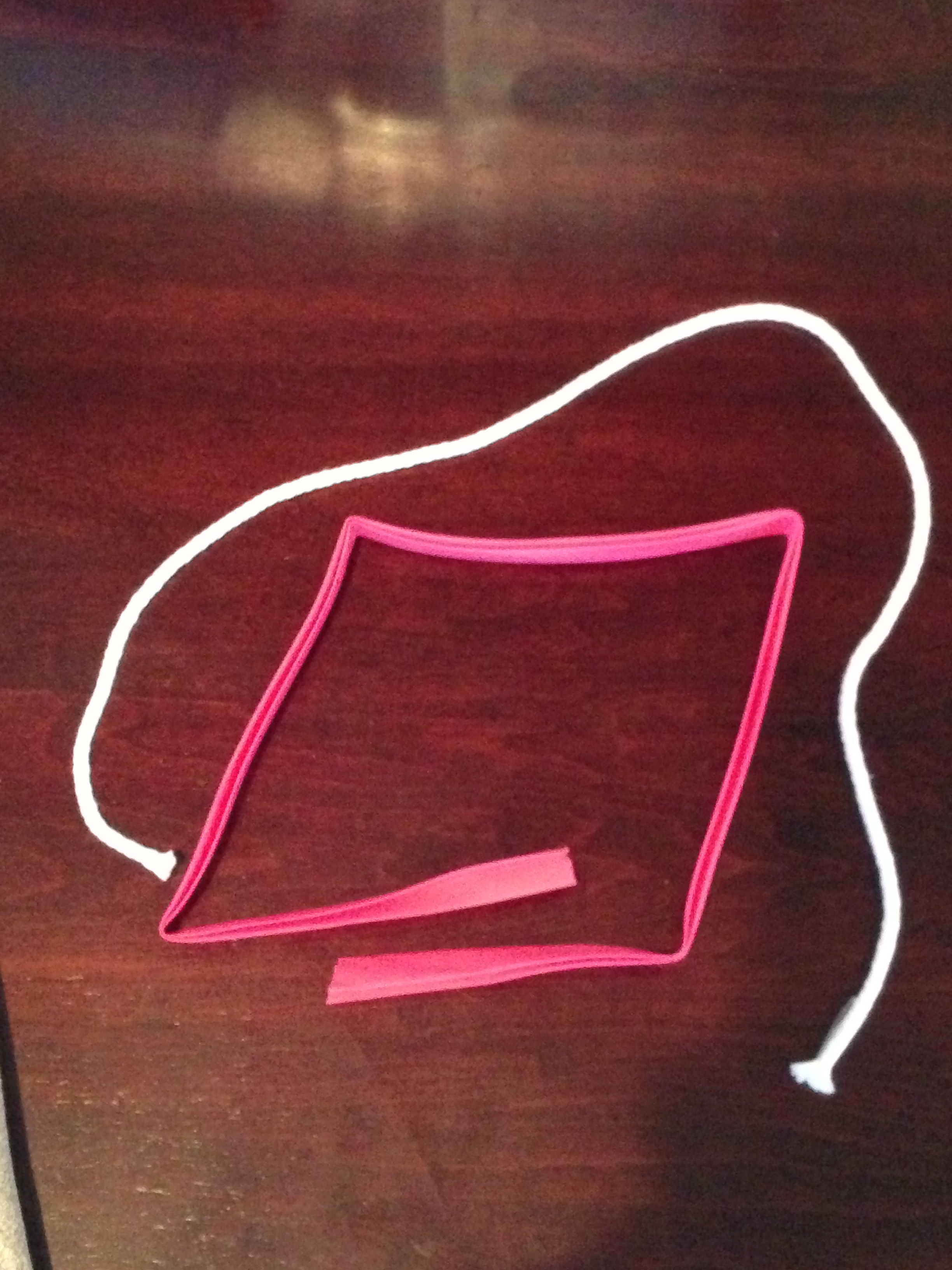
You can buy ready made piping from store or use the following method to make one.

Get any single folded store bought bias tape and piping cord. I used a double folded bias tape because that is what I had. It just make the seam a little bulky and hard to tackle. You can get piping cord from the upholstery section of fabric store.

Note: You can make home made bias tape also. I was lazy to make mine. It works out just fine. Search YouTube for ” Make Bias Tape” and you will find plenty of tutorials.

photo(7)

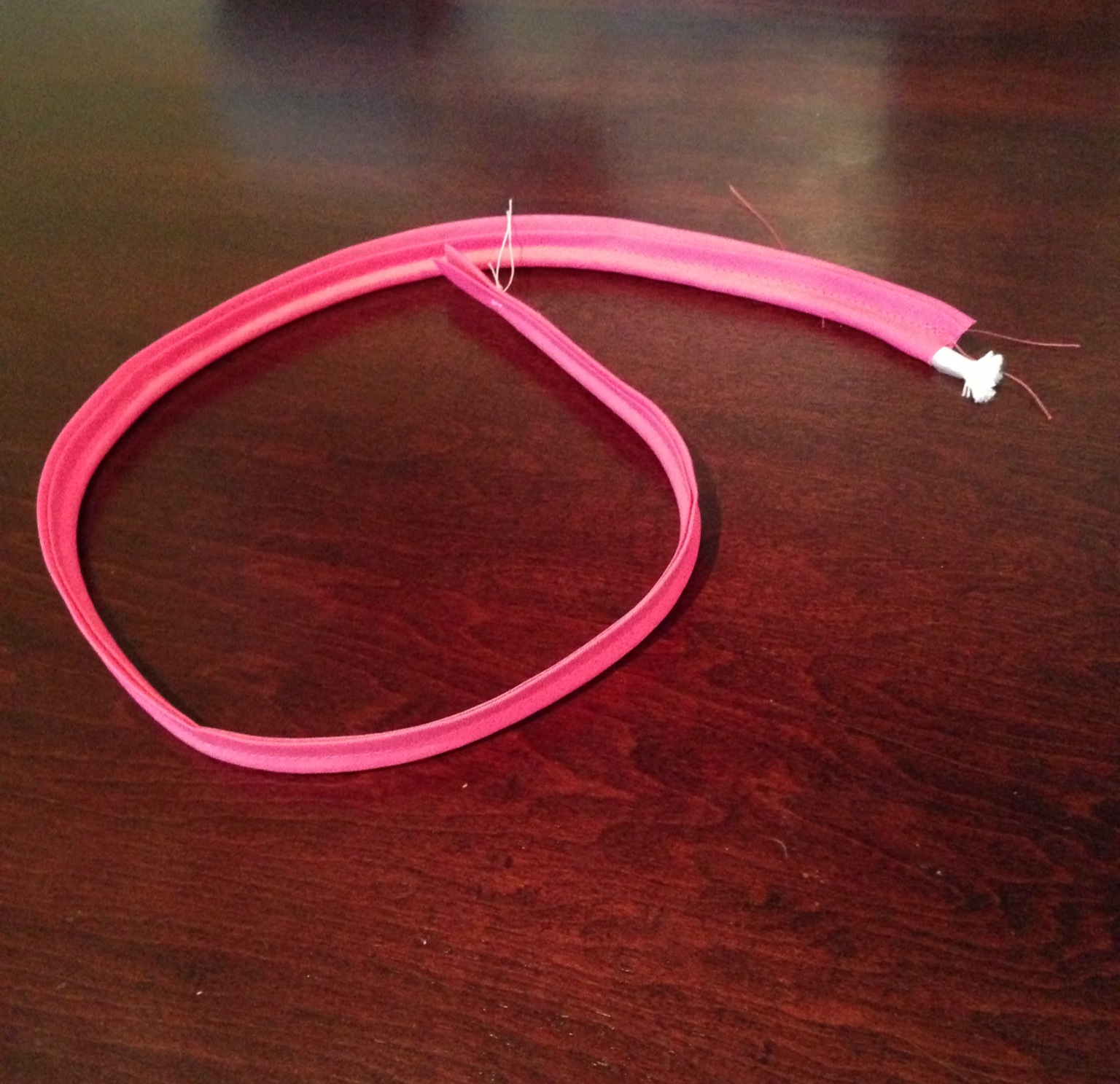
Put the cord inside the bias tape as shown and pin it.
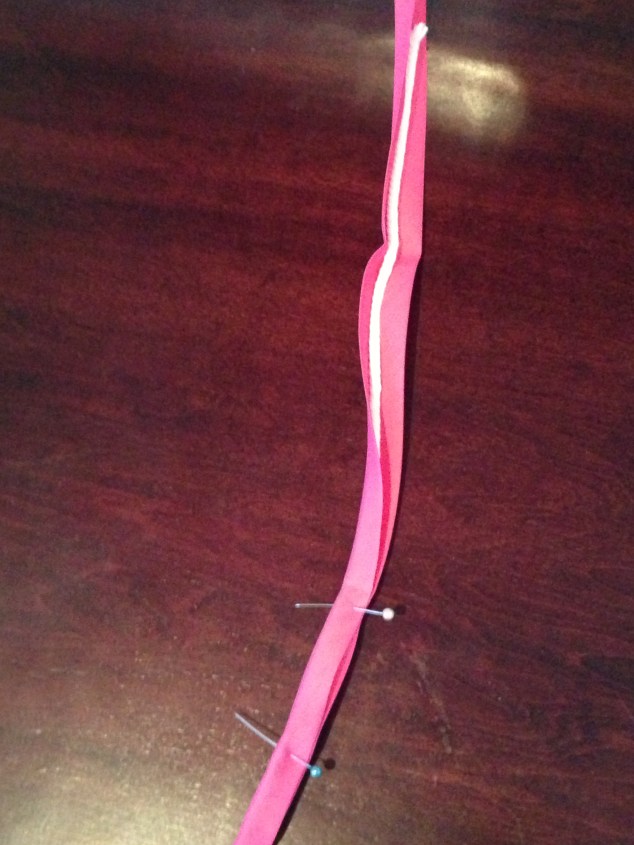
photo(8)

Use a zipper foot to stitch very close to the cord as shown.

photo(9)

Now piping is done.

photo(10)

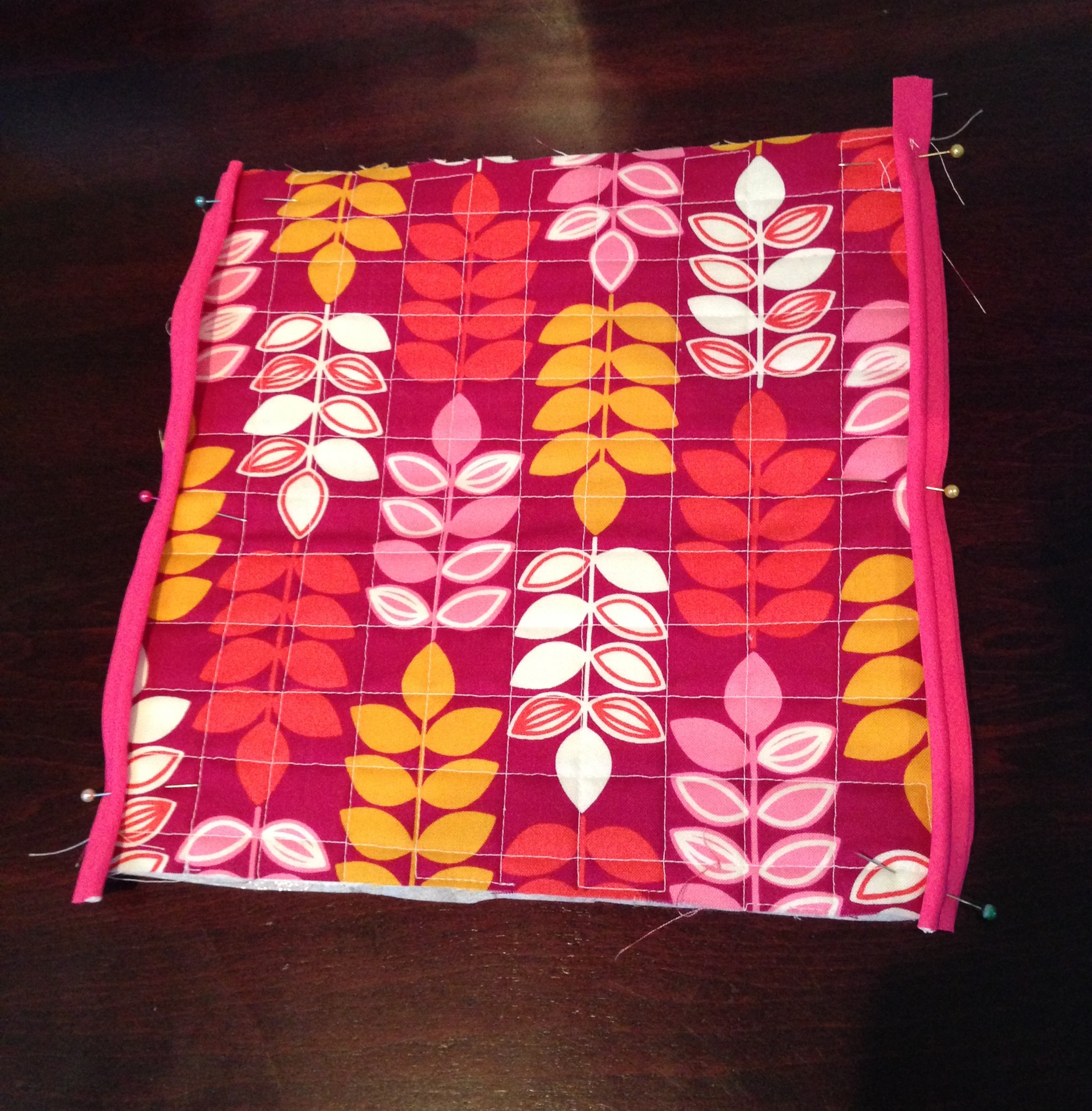
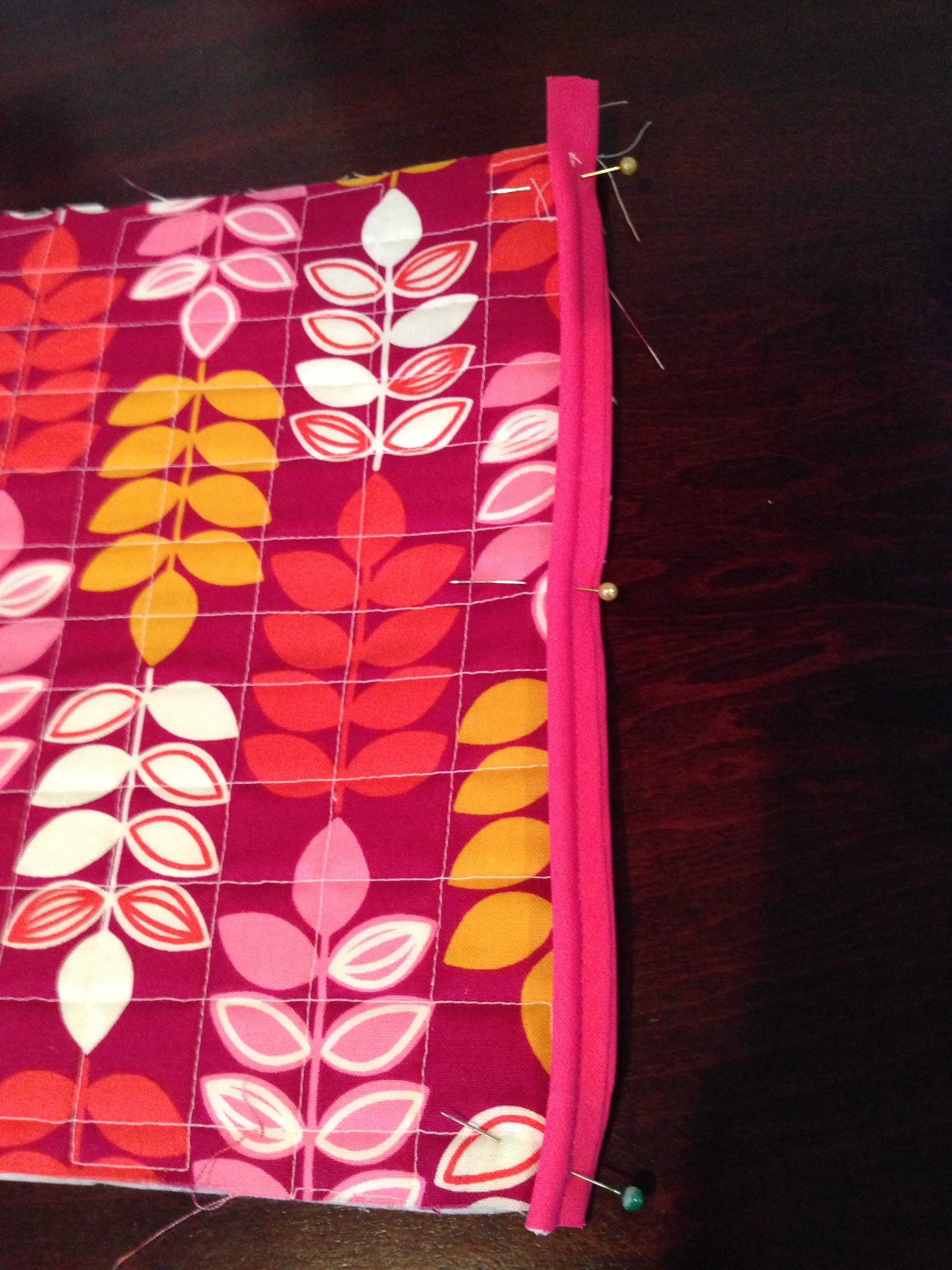
Align the raw edge of the outer fabric right side with the raw edge of the piping and pin them together.

Note: This is the side of the pencil pouch. So if you want to place your fabric in a particular way, this is the time to decide that.

photo(11)

Again using a zipper foot stitch along the piping.
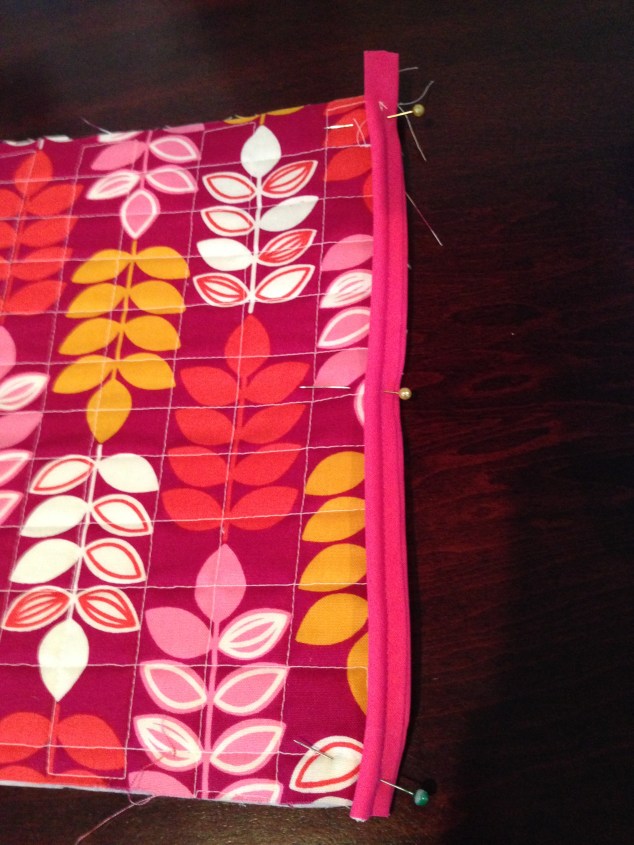
photo(12)

Now put the lining and outer fabric right side together to be ready for zipper insertion.

Note: The marking on the lining with respect to the piping position needs to be perpendicular to each other.

photo(13)

Step 6: Zipper Insertion

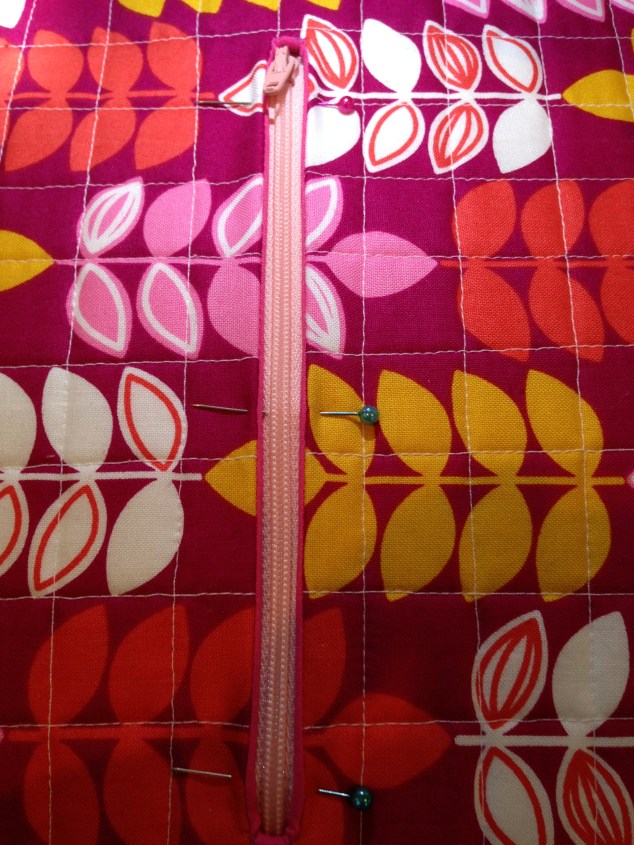
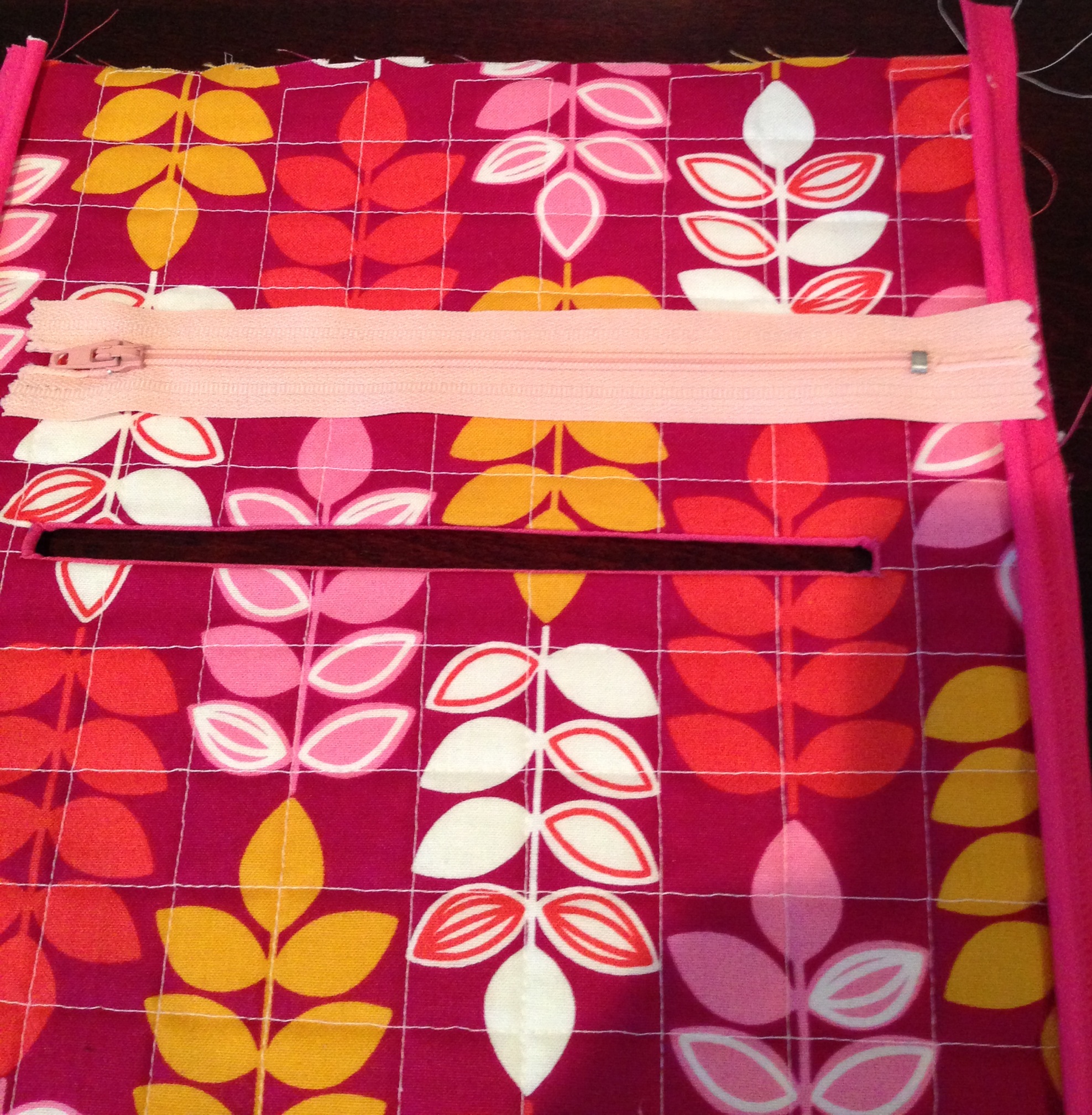
Place the quilted outer fabric and lining fabric right right together and stitch along the marked lined rectangle. After that cut an incision right in the middle and clip the corners.
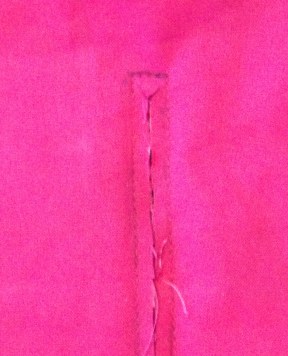
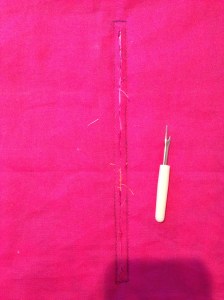
photo(15) photo(16)

Then turn the fabric right side out by putting the lining through the incision. Press well to make a clean edge.

photo(17)photo(18)

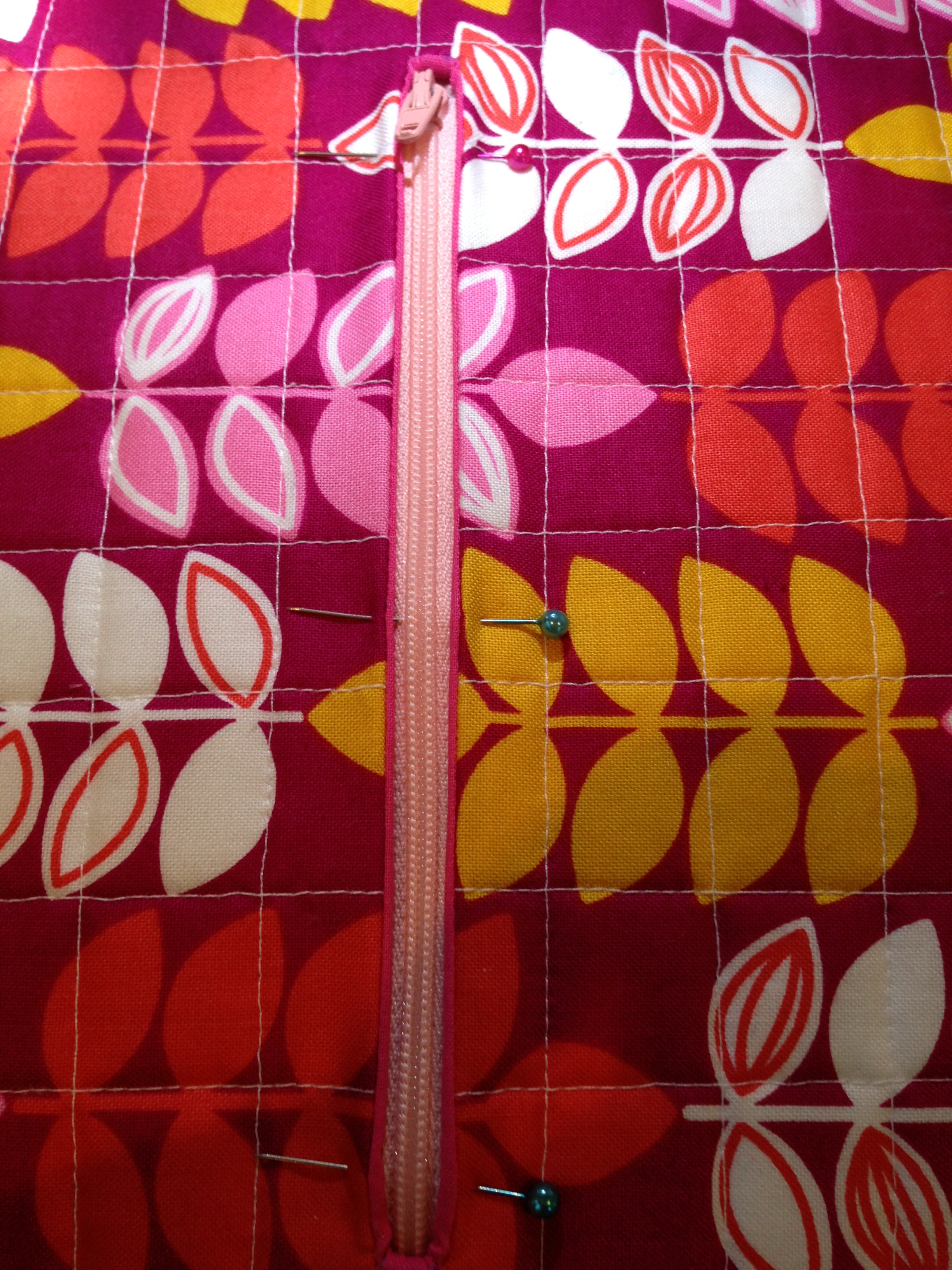
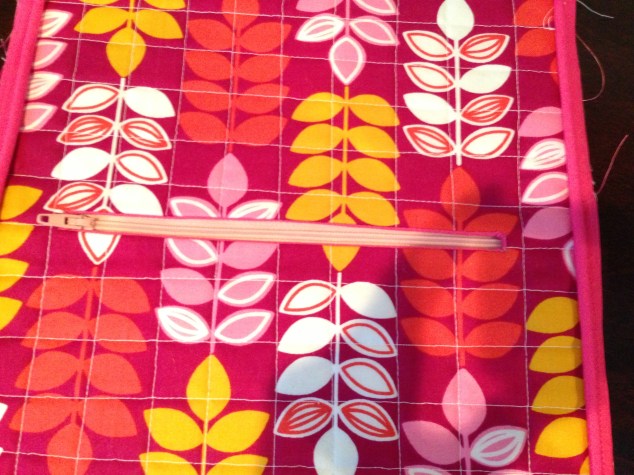
Now place the zipper right under the opening and pin it as shown.
photo(19)

photo(20)

Now stitch through fabric and lining layer and zipper together as shown.

photo(21)

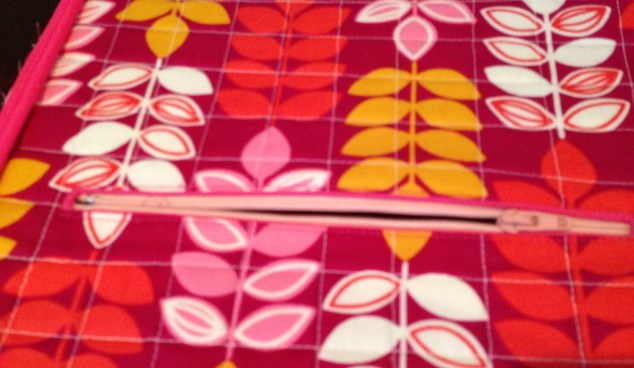
Now open the zipper at least half way through.
photo(22)

Step 7 : Making the body of the pencil pouch

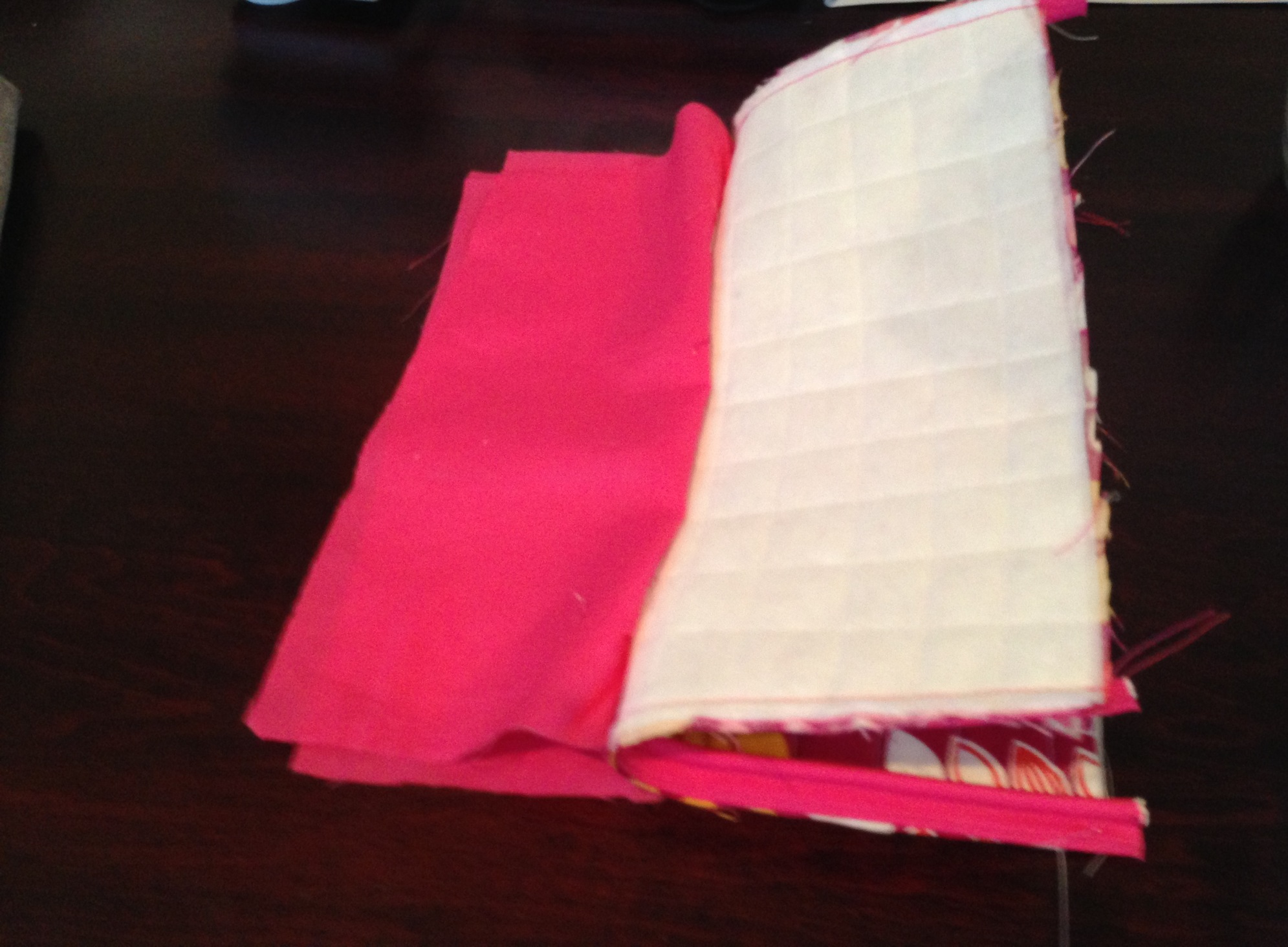
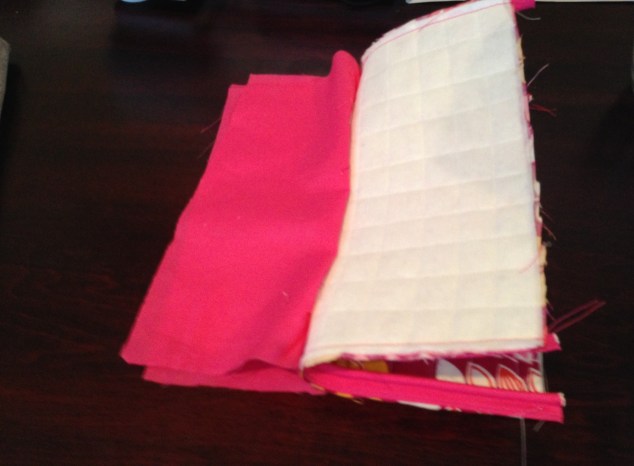
Now pull the outer fabric together as shown and also the lining fabric. Both should be at 2 sides of the zipper.
photo(23)

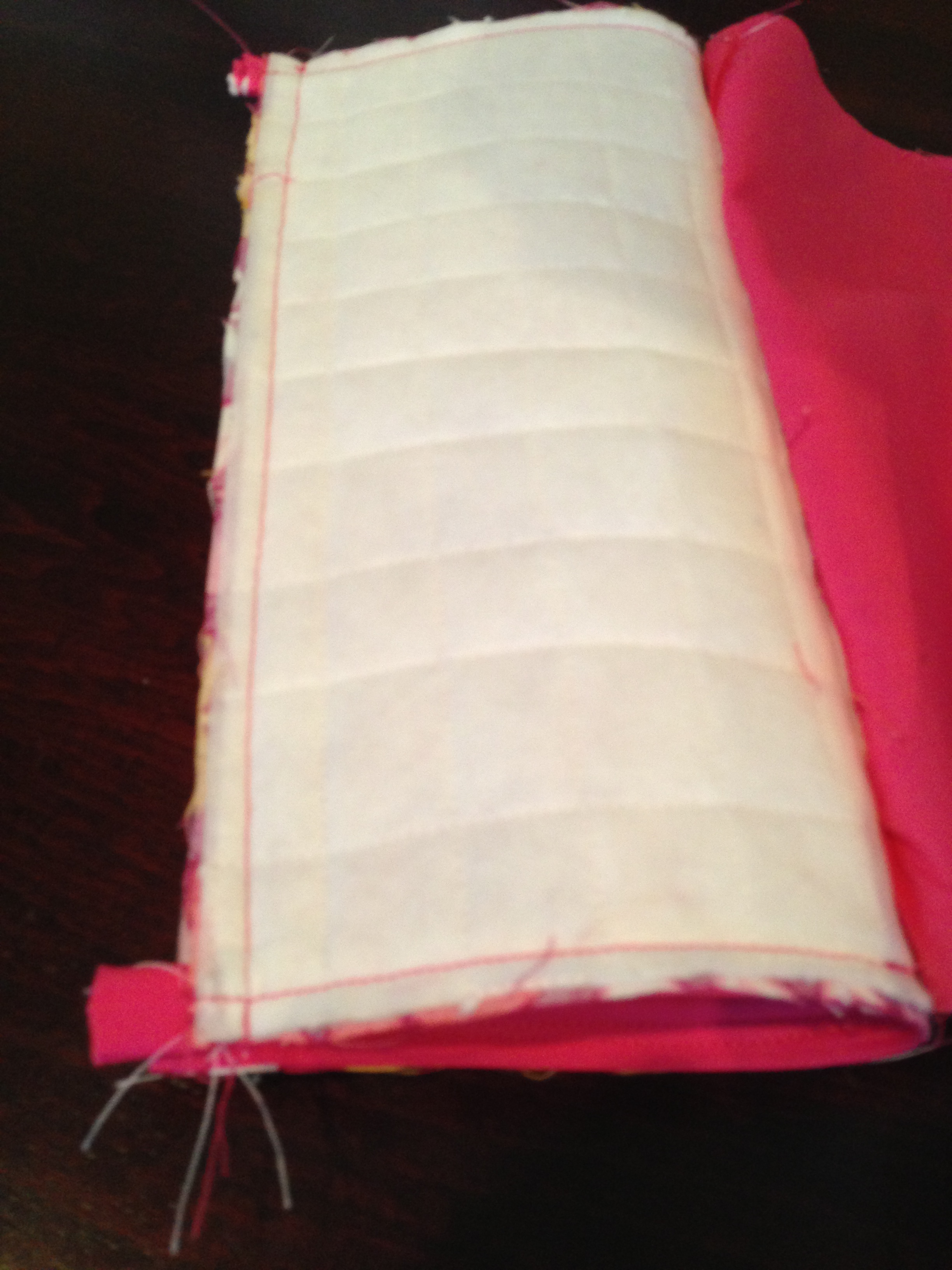
Stitch the long edge of outer fabric (see pic below).

photo(24)

Now put the folded pull tab on the circular side and pin it. Tab can be placed on one side or both the sides. I just used one.

photo(26)

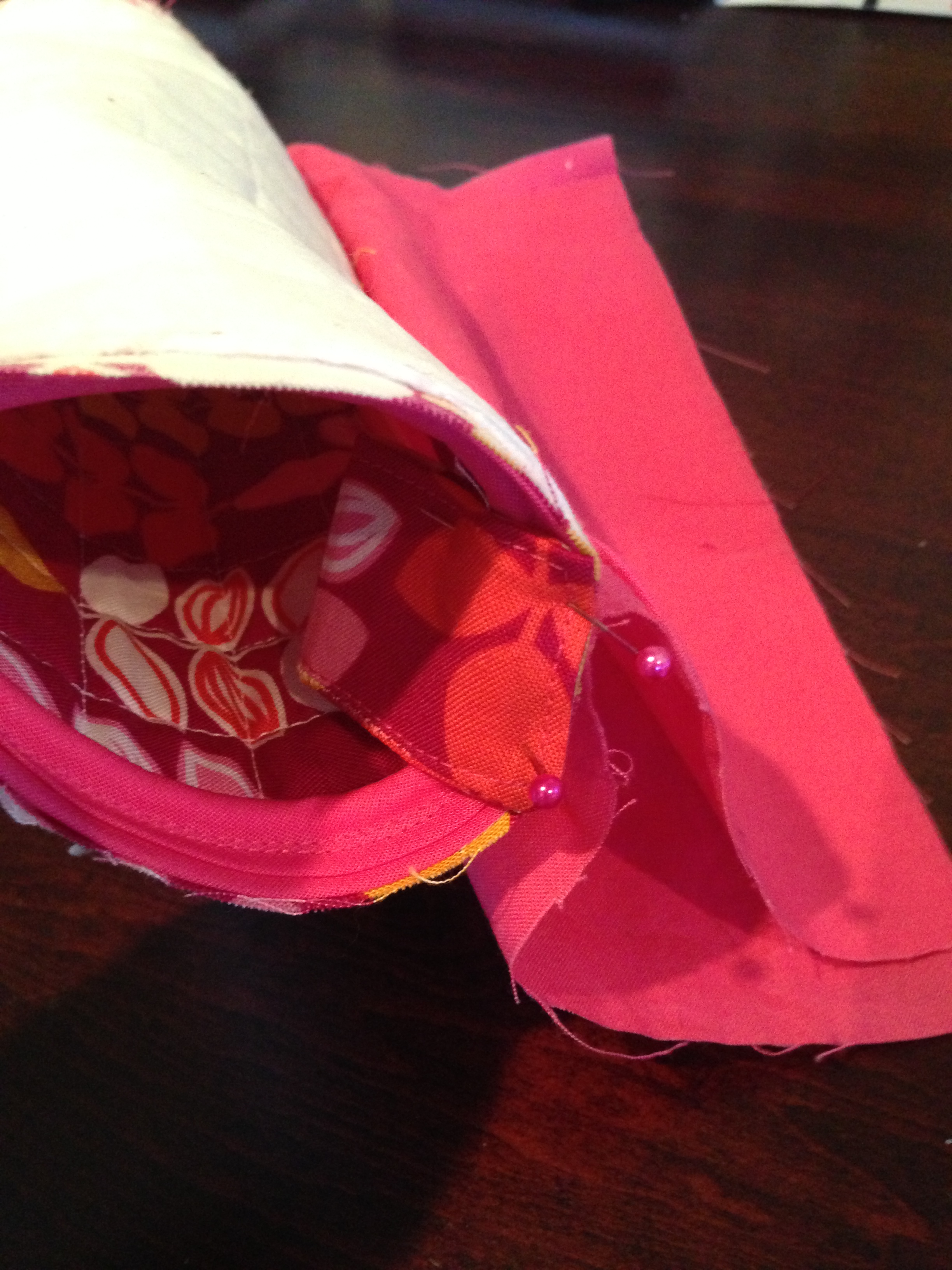
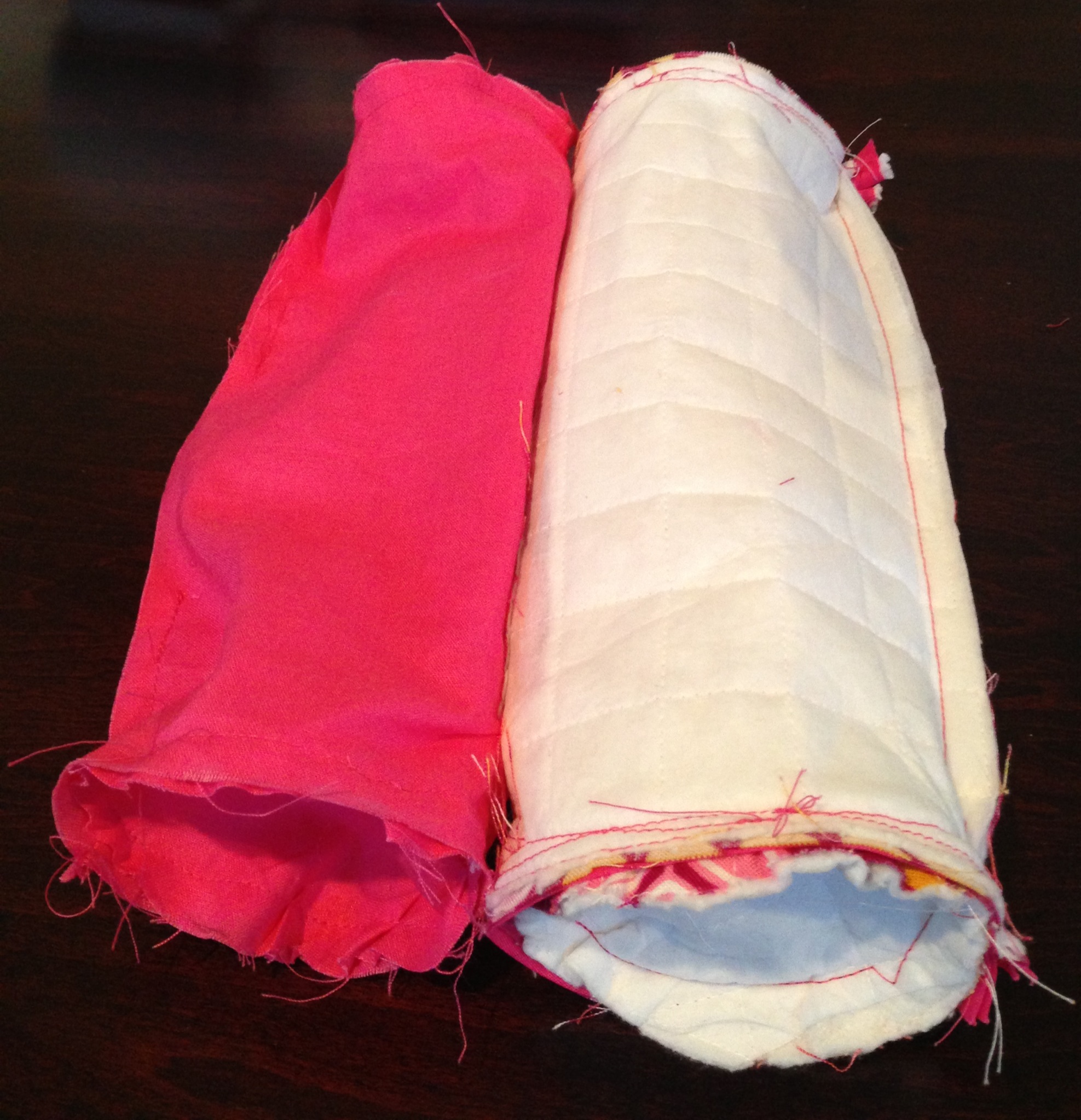
Pin the circular quilted fabric on the side over the pull tab. On the other side pin the circle without the pull tab. Stitch 1/4″ seam along the circumference of the circle. The result is shown below.

photo(27)

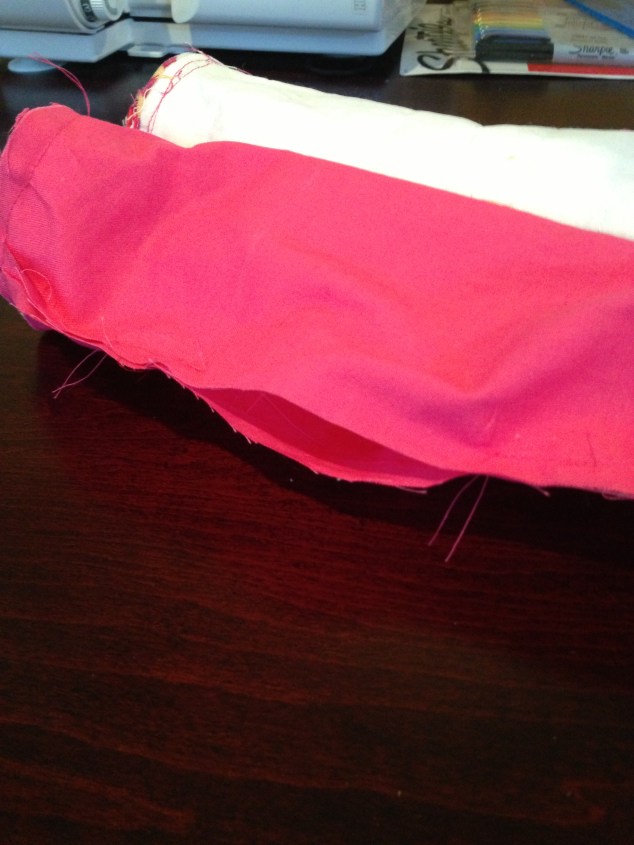
Do exactly the same for the lining except there is no pull tab to place and keep the bottom of the lining  open ( leave about 3 ” opening) as shown. This opening is needed to turn the fabric right side out.
photo(28)

Finally Wah La !

Now put your fingers inside the hole in the lining and pull the outer body of the fabric through the hole completely.You might struggle a bit but don’t worry it will work.  Your pencil pouch is now ready. Isn’t it Magic or what?
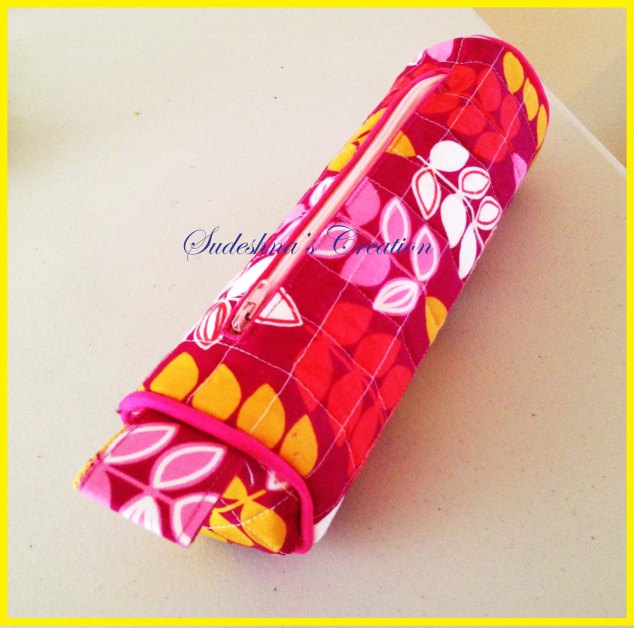
photo(30)

I hope you liked my tutorial. Please feel free to ask me any question. You can email me or post in my Facebook page. I will be happy to answer it. Show off your project. Email me I can post it on my Facebook page.

Below is my inspiration for this project: I changed several dimension to make it easy for me and used quilting.

http://www.sewtogether.com.au/1/post/2011/10/tutorial-a-barrel-shaped-knitting-needle-holder-or-pencil-case.html

Sew Simple Strip Quilt

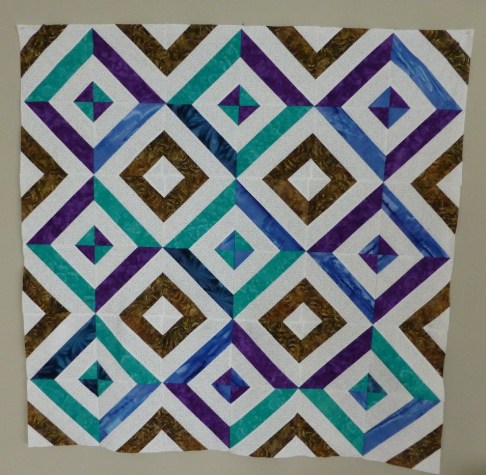
FinishedQuiltIsn’t it bright and colorful? My heart gets filled with joy when I see bright colored quilts. This particular one is my personal favorite because not only the color of the quilt catches your eye but also you will be amazed to know how quick and easy it is to sew. You can simply finish it in one day if you are spending 4 hrs to sew. But if you are like me who can never manage to sit that long can do it in 2 days.

Here is the tutorial that I promised.

Few things you might want to know if you are first time quilter. Cotton is the most readily available fabric to make quilts with. In US quilters prefer to use cotton fabric and 100% cotton thread to sew. Thread is personal preference. You can use other polyester thread if 100% cotton thread is not readily available. Quilters quality cotton is a little heavy weight, unlike the cotton saree cotton which are very fine quality.

Also to note is all the stitches used are straight stitches with 1/4″ seam allowance. That means the stitch line will be  1/4″ away from the fabric edge.

I used cotton fabric strips of 2.5” wide. You can also get pre-cut 2.5” strips in your local fabric store. They are called jelly rolls. Yes you heard it right! They are not jelly but fabric rolls.

Here is what you need.

Any colorful fabric you can get hold of, cut them into long 2.5” inch strips. Since I cut from bolted fabric mines are 44″  long.
Also you need white or light color fabric strips to get a good contrast.
Rotary cutter
Ruler and cutting mat

(If you don’t have rotary cutter and mat use a ruler to draw exact 2.5″ strips on fabric and cut them with scissors)
And of course Sewing machine

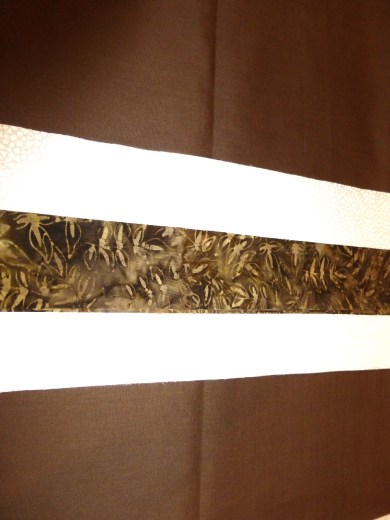
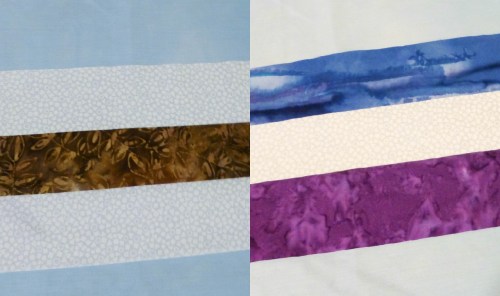
I have shown the arrangement of the strips in the pics. 2 sets of arrangements needed.

wcw

Set 1 color-white-color

cwc

Set 2 white-color-white

Step 1:

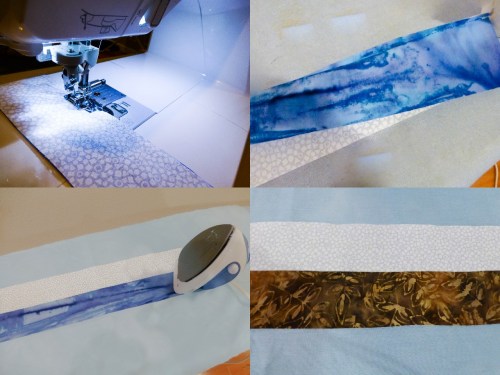
Sew 1 white and 1 color strips together with right sides of fabric facing each other. Use a 1/4″ seam allowance. Once sewn together press the seam and open the fabric. Now it will look like this.

step1

Step 2:

Sew the third strip with the already sewn strip set like so with one set1 and another set2

step2

Step 3:

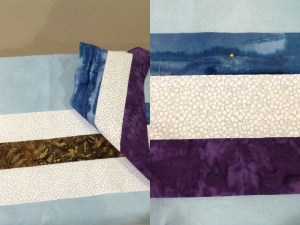
Put set1 and set 2 right sides together as shown and sew 2 long sides to make a tube.

step3

Step 4:

Now is the most difficult part of the project. You need to cut the fabric tube in 45degree angle. I used a 9” square ruler. Place the ruler diagonally as shown right on top of the seam as shown and cut at 45 degree angle. Discard the first strip as it will be an incomplete part. Then moving the ruler aligned with either top seam or bottom seam cut triangles like shown. They are basically right angle isosceles triangles.

step4

Step 5 If you have successfully finished the Step4, no need to worry. From now on everything is super easy, I promise.

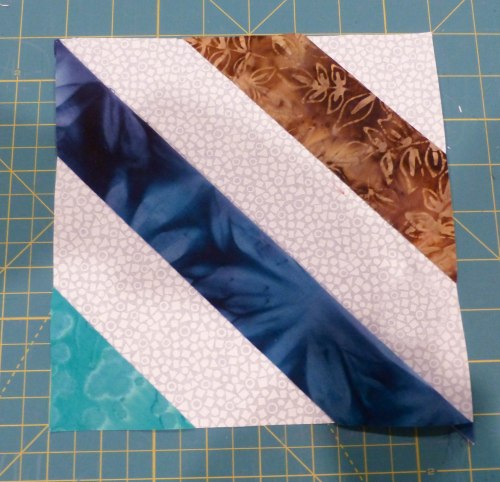
Now take each triangle and press it open, and you will get a perfect square like below.

BlockIf the square looks more like a rhombus, that means you have not placed the 45 degree angle line of ruler on the seam but probably on the edge of the fabric tube. Now don’t ask me how I knew ?

Now pat yourself in the back, because you have successfully made the block for the quilt. All you need is to assemble them.

Step 6

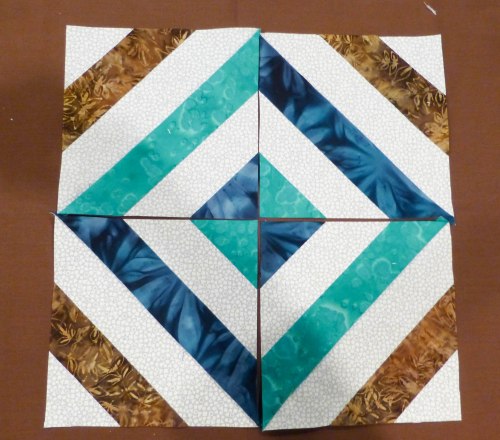
Assemble 4 of the blocks like shown to make a bigger square. The square should come roughly 16”x16”.

4blocksYeah! Done!

In my quilt I used 9 of such big blocks. Here is how it looks after piecing all the blocks.

Final Pieced

Please don’t be shy to ask any question regarding this project. I would be happy to answer. Experts and friends please let me know do you like the quilt?